
In last couple of years, while Coaching multiple leaders across cultures like Japan, Pakistan and beyond, one fact has become visible to me:
“Coaching is never culture-neutral..!!”
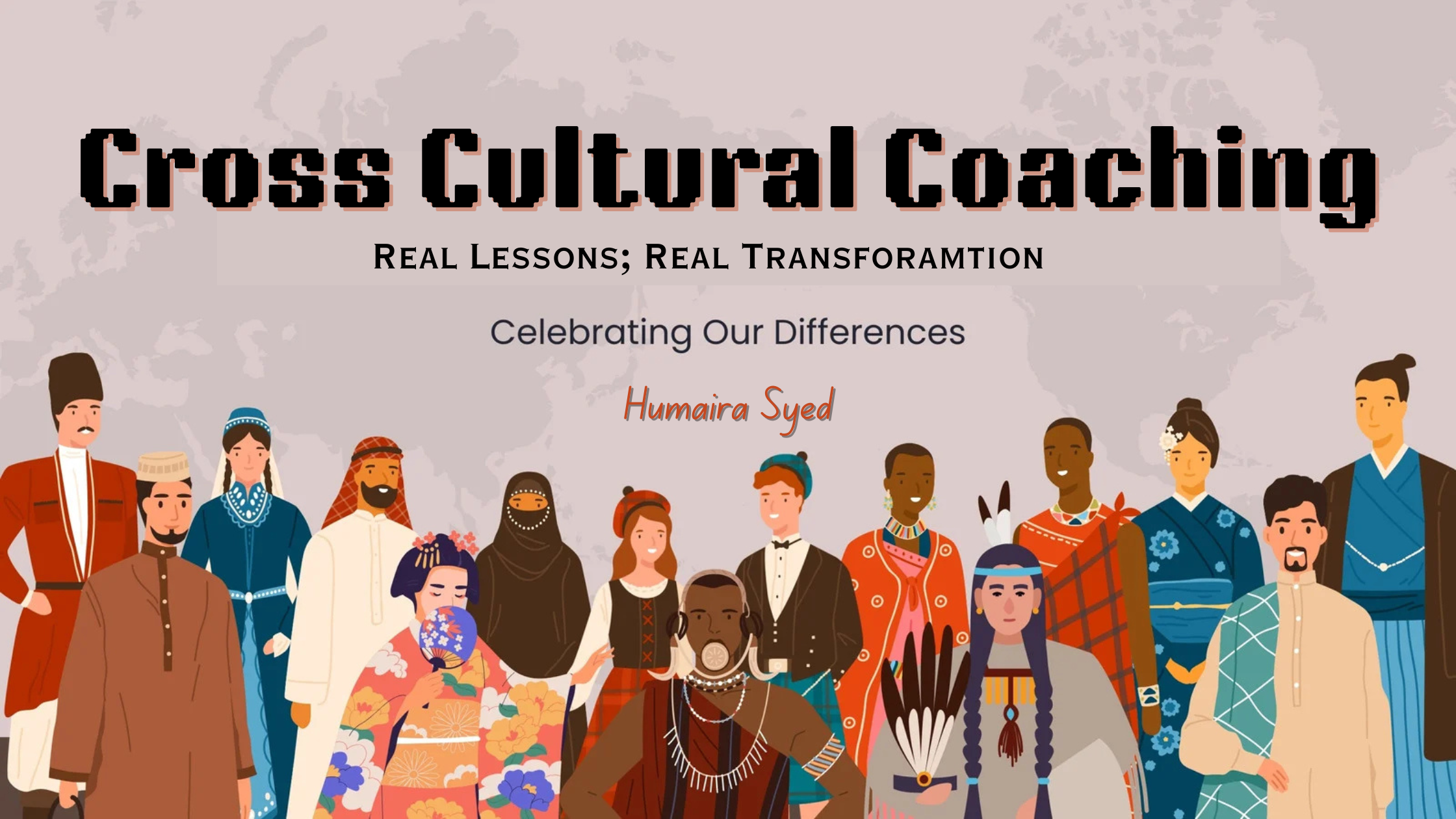
“Coaching dynamics can shift dramatically across cultures.”
Cross Cultural Coaching isn’t just something I’ve learned—it’s something I’ve lived. Working with leaders across cultures and time zones has shown me just how deeply cultural context shapes things we often take for granted—like silence, trust, or what leadership even looks like.
Although the majority of coaching techniques guarantee universal efficacy, I’ve discovered—often the hard way—that what functions well in one cultural context can totally backfire in another. From Tokyo’s reserved boardrooms to Islamabad’s expressive leadership circles, I have personally witnessed how cultural variables influence power, communication, trust, and transformation. This post isn’t about theory. It’s an examination of what occurs when a profession with Western roots, like coaching, is adapted to drastically different societal contexts. In this piece, I’m sharing learnings and insights from my coaching journey that challenged my assumptions and reshaped my approach in powerful ways.
-
Listening Beyond Words
-
Authority and Trust
-
Reframing Western Tools
Insight 1: Listening Beyond Words — When Silence Speaks Louder
In high-context cultures like Japan, nonverbal clues, tone, and silence are frequently used to express meaning in addition to spoken words. In Japan, “the proportion of information conveyed by verbal content is relatively smaller…and contextual and nonverbal cues…play a relatively greater role” as stated in Edward T. Hall’s seminal theory.
As I discovered in my early sessions with Tokyo executives, asking an open-ended inquiry like “How do you feel?” frequently often returns polite silence rather than insight. What followed was a gentle dance: I discovered how to provide space for genuine expression by pausing longer, mirroring their tone, and observing subtle changes in body language.
This listening technique contrasts sharply with my coaching experience in Pakistan, where greater expressive interaction coexists with high-context shared cultural knowledge. Nevertheless, the idea is still the same: being felt is just as important to effective coaching as being heard. I had to slow down, lean into pauses, and rephrase my questions in Japan so that they invited rather than demanded an answer. this is much more than the Cultural Adjustment as an Expat , what I have been writing about before.
As noted by Lesley Hayman from coaches across East Asia, trusting silence “even the coaching dialogue becomes quieter and leaves more pauses” until clients find the right words. I discovered that genuine coaching influence frequently resides in the silence, where profound meaning and cultural resonance start, by becoming more conscious of what is not said.

Different minds on one table means alot
Insight 2: Authority & Trust — Navigating Cross Cultural Expectations
Effective coaching is based on trust, which is interpreted differently across cultural norms.
In Pakistan, leaders frequently value warmth, direct communication, and mutual respect. Sharing personal experiences early in a relationship can help to establish connection, while eye contact and expressive body language demonstrate honesty. Authority is co-constructed in this context, and trust grows as a result of relationship transparency.
In contrast, coaching in Japan frequently starts with formality and constraint. Prior to opening up, Japanese leaders prioritise hierarchical respect, modesty, and observing social protocols. Title, position, and context are extremely important. I learned that addressing clients in their right form—san or sensei—is as important as the questions I ask. Rather than engaging in in-depth, personal conversations, I needed to build professional credibility first, which often meant saying little and listening more.
These discrepancies are consistent with Hofstede’s dimensions: Pakistan scores higher on Power Distance and Collectivism, where relational trust is fostered through warmth and shared identity, whereas Japan scores high on Uncertainty Avoidance, which rewards formality and procedural trust. Conforming to these criteria is not an option; it is absolutely essential. In Japan, I started each meeting with proper meeting etiquette, calm introductions, and transparent agendas. In Pakistan, I started with a lighter tone, presented my coaching philosophy, and encouraged more informal communication. Both tactics developed trust, but in culturally specific ways.
Insight 3: Coaching Tools Beyond Western Lens— Rethinking Across Cultures
The majority of official coach training programs, including those approved by the ICF or EMCC, are heavily influenced by Western psychological paradigms. Tools like GROW, SMART goals, and Clean Language Techniques are frequently presented as generally applicable. However, I soon discovered that cultural context alters not only the tools’ efficacy but also their meaning when I started using them in Pakistan and Japan.
For example, the GROW model envisions a linear, goal-oriented structure in which customers are required to describe what they “want” and identify personal roadblocks. However, in collectivist settings, clients may not see aspirations as strictly personal. In Japan, I observed that leaders were typically hesitant to declare big personal ambitions; instead, they prioritised harmony, team consensus, and organisational alignment.
Similarly, in Pakistan, clients occasionally sought affirmation for community-based decisions or pondered how their activities affected their family or social reputation.
Rather than throwing away these tools, I learnt to rethink and reframed them. Instead of asking,
“What do you wish to accomplish?”
I would rather ask,
“What outcome would feel most aligned with you and your team?”
I modified SMART goals to include relationship accountability rather than simply personal deadlines. This change did not undermine the coaching; rather, it enhanced it. It improved the process’s relevance, respectability, and sustainability.
“Every culture brings a new lens to coaching. That’s what makes it both challenging and beautiful.”
This experience supports the need for more culturally grounded coaching methods, which is a developing debate in the coaching literature. The significance of tailoring evidence-based strategies to local values and leadership norms is emphasised by academics such as Passmore and Joo. This is now a daily practice for me rather than just an academic concept.

“Coaching becomes truly powerful when we embrace the diversity of global perspectives.”
Conclusion: Coaching as Cultural Dialogue
At its best, coaching is a cultural conversation rather than a performance technique.
I’ve learned from working with leaders in Pakistan and Japan that deeper currents of context, meaning, and worldview influence the coaching dialog in addition to tools and approaches. As an Introverted Expat navigating the cross cultural shift, I learned that hearing is only one aspect of listening. What each culture values most is the foundation of trust. And in order to represent new realities, well-known frames must change.
As I progress from practitioner to academic, I find myself drawn more and more to inquiries that cast doubt on the applicability of coaching paradigms. How can frameworks that respect cultural complexity be developed? How can we guarantee that coaching is not only efficient but also fair in all leadership contexts around the world? These are actual, vital, and necessary questions, not only scholarly ones. By sharing these insights, I hope to contribute to a larger and more inclusive perspective of what coaching entails.
What has your experience been with coaching across cultures?
I’d love to hear from other coaches or professionals navigating cross cultural landscapes in coaching—feel free to comment or connect with me on LinkedIn. Let’s keep learning together.

Empower yourself to shine brightly as an introverted expat, and let's make this experience a truly enriching one!

 | Powered By